
By Viéhpro Industries Ltd
Every successful livestock farmer needs to understand the key external parts of a cow’s body. Why? Because knowing these parts helps you monitor health, assess condition, and select better animals for breeding, selling, or keeping in your herd.
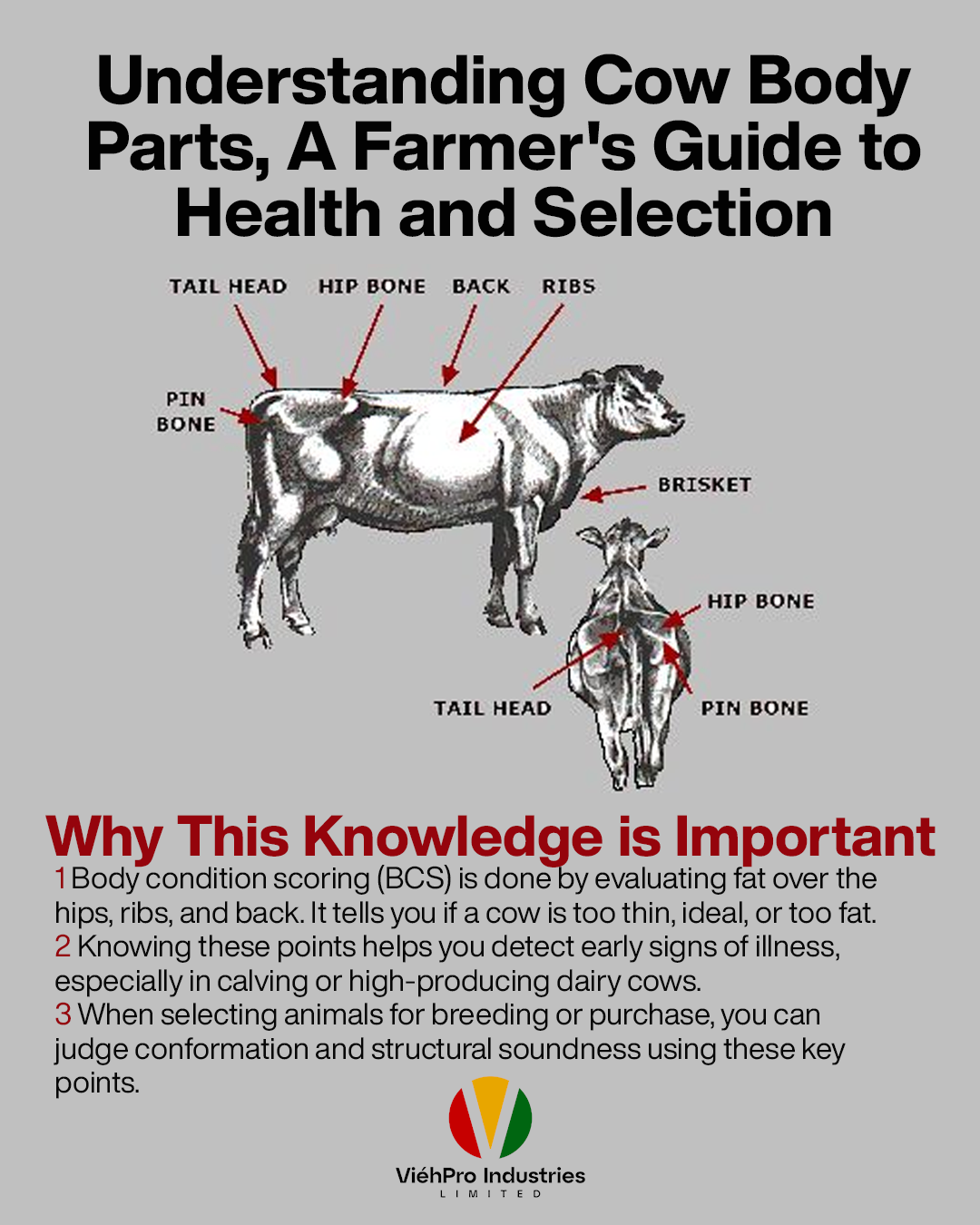
Here’s a simple breakdown of the main body points shown in the diagram:
🔍 Main External Body Parts and Their Role
1. Tail Head
The point where the tail joins the body.
🔹 Why it matters: Check for swelling or discharge—can signal reproductive issues or nearing birth in pregnant cows.
2. Hip Bone (Hooks)
Located on each side of the cow’s rump.
🔹 Why it matters: Used for body condition scoring. If bones are too sharp or sunken, the cow may be underfed or sick.
3. Pin Bone
Located just under and behind the hip bone.
🔹 Why it matters: Wide pin bones in heifers usually mean easier calving.
4. Back and Ribs
This is the cow’s topline and side frame.
🔹 Why it matters: Check here for muscle tone and fat coverage to assess feeding quality and energy levels.
5. Brisket
The chest area, below the neck.
🔹 Why it matters: If swollen, it could signal fluid buildup, poor lying conditions, or other health issues.
🐄 Why This Knowledge is Important
- Body condition scoring (BCS) is done by evaluating fat over the hips, ribs, and back. It tells you if a cow is too thin, ideal, or too fat.
- Knowing these points helps you detect early signs of illness, especially in calving or high-producing dairy cows.
- When selecting animals for breeding or purchase, you can judge conformation and structural soundness using these key points.
📢 At Viéhpro Industries Ltd…
We’re committed to helping farmers make informed decisions—starting with basic livestock knowledge. Understanding body parts is the foundation for better care, feeding, and breeding.
Knowledgeable farmers grow profitable herds.