
When it comes to dairy farming, most people focus on feed quantity, forage quality, or protein content. But beneath the surface lies a powerful, often underestimated contributor to success: minerals. These tiny nutrients play a colossal role in shaping the productivity, health, and longevity of a dairy herd.
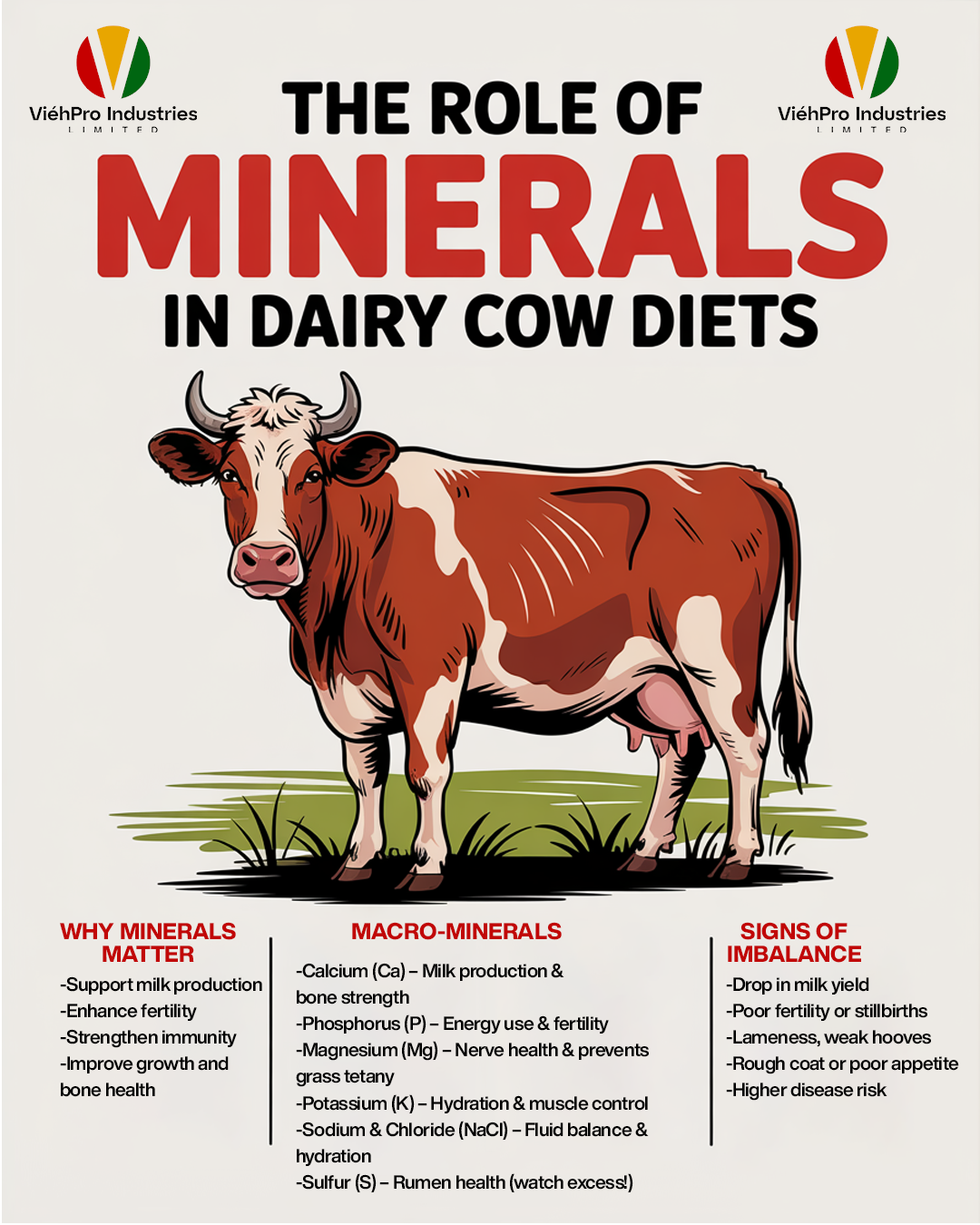
🧬 Why Minerals Matter
Minerals are essential micronutrients that support a wide range of bodily functions in cows—from bone development and muscle contraction to immune defense and reproductive efficiency. A deficiency (or even an imbalance) can silently chip away at herd performance, leading to decreased milk yields, poor fertility, or even illness.
Minerals are classified into two main groups:
- Macro-minerals – Required in larger amounts
- Micro-minerals (Trace minerals) – Needed in smaller quantities, but equally important
🧂 Key Macro-Minerals and Their Functions
- Calcium (Ca)
- Essential for milk production, muscle function, and bone strength
- Deficiency can lead to milk fever, especially after calving
- Phosphorus (P)
- Supports energy metabolism, skeletal development, and fertility
- Imbalances affect appetite and reproductive performance
- Magnesium (Mg)
- Vital for nerve function and enzyme activity
- Low levels can cause grass tetany, particularly in grazing cows
- Potassium (K)
- Helps with nerve transmission and fluid balance
- Crucial in hot climates for maintaining hydration
- Sodium (Na) and Chloride (Cl)
- Maintain electrolyte balance and hydration
- Typically supplied as common salt (NaCl)
- Sulfur (S)
- Supports protein synthesis and rumen microbes
- Excessive levels can interfere with copper absorption
🔬 Important Micro-Minerals
- Zinc (Zn)
- Boosts hoof and skin health, immunity, and fertility
- Deficiency leads to weak hooves and increased mastitis cases
- Copper (Cu)
- Supports enzyme activity, pigmentation, and immunity
- Over-supplementation can be toxic, especially in some breeds
- Selenium (Se)
- Antioxidant that strengthens immunity and reproduction
- Often paired with Vitamin E to prevent retained placentas and white muscle disease
- Manganese (Mn)
- Important for reproduction, growth, and bone formation
- Iodine (I)
- Essential for thyroid function and calf development
- Deficiency may lead to stillbirths or weak calves
🐮 Strategic Mineral Supplementation
Balancing minerals isn’t about throwing in a multi-mineral block and hoping for the best. It requires:
- Soil and forage testing to detect existing deficiencies
- Stage-specific feeding, as mineral needs shift during lactation, dry periods, and pregnancy
- Form of minerals, with organic (chelated) forms often offering better absorption than inorganic ones
- Water source analysis, since minerals like sulfur or iron in water can interfere with absorption
🚨 Signs of Imbalance
Watch for these clues in your herd:
- Drop in milk yield
- Weak calves or reproductive issues
- Poor appetite or rough coats
- Lameness or poor hoof condition
- Increased disease outbreaks
🌾 Final Thoughts
Minerals might be small in quantity, but they make a big difference. A well-balanced mineral diet is like a finely tuned orchestra—when everything is in harmony, the result is a thriving herd, efficient milk production, and reduced health issues.
As you plan your feeding strategies, never underestimate the silent power of minerals. The success of your dairy farm might just depend on it.