
Livestock need a balanced diet to stay healthy, grow well, and produce milk, meat, or eggs. While proteins, carbohydrates, and fats provide energy, minerals play a key role in keeping animals strong and productive. Even though they are needed in small amounts, minerals are essential for various body functions.
Types of Minerals
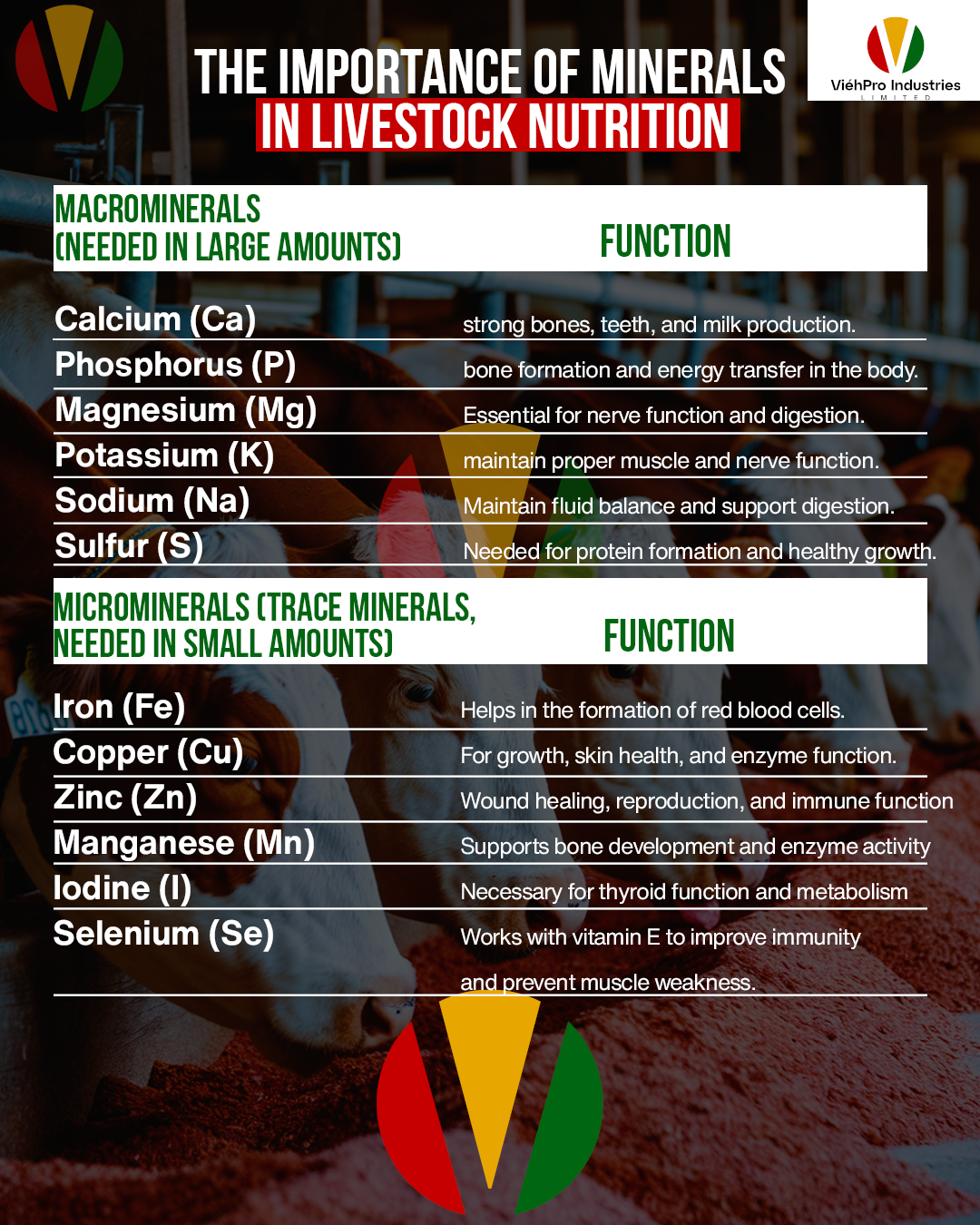
Minerals in livestock nutrition are divided into two categories:
| Macrominerals (Needed in Large Amounts) | Function |
|---|---|
| Calcium (Ca) | Important for strong bones, teeth, and milk production. |
| Phosphorus (P) | Helps in bone formation and energy transfer in the body. |
| Magnesium (Mg) | Essential for nerve function and digestion. |
| Potassium (K) | Helps maintain proper muscle and nerve function. |
| Sodium (Na) and Chlorine (Cl) | Maintain fluid balance and support digestion. |
| Sulfur (S) | Needed for protein formation and healthy growth. |
| Microminerals (Trace Minerals, Needed in Small Amounts) | Function |
| Iron (Fe) | Helps in the formation of red blood cells. |
| Copper (Cu) | Important for growth, skin health, and enzyme function. |
| Zinc (Zn) | Aids in wound healing, reproduction, and immune function. |
| Manganese (Mn) | Supports bone development and enzyme activity. |
| Iodine (I) | Necessary for thyroid function and metabolism. |
| Selenium (Se) | Works with vitamin E to improve immunity and prevent muscle weakness. |
Why Are Minerals Important?
- Growth and Development
Minerals are essential for the growth of bones, muscles, and organs. Young animals need enough calcium and phosphorus for strong bones. Without these minerals, animals can suffer from weak bones and slow growth. - Reproduction and Fertility
Deficiencies in minerals like selenium, zinc, and copper can lead to fertility problems in both male and female animals. Proper mineral intake ensures healthy pregnancies and strong newborns. - Milk Production
Dairy animals need high levels of calcium and phosphorus to produce milk. A lack of these minerals can lead to low milk yields and health issues like milk fever in cows. - Immunity and Disease Resistance
Minerals like zinc, selenium, and copper help boost the immune system, making animals less prone to infections and diseases. - Energy and Metabolism
Some minerals help in converting food into energy. Magnesium, phosphorus, and iodine play key roles in digestion and metabolism. - Healthy Skin, Hooves, and Hair
Minerals like zinc and copper are important for maintaining healthy skin, strong hooves, and a shiny coat. Deficiencies can lead to hair loss, cracked hooves, and skin infections.
Signs of Mineral Deficiency
When animals lack essential minerals, they may show symptoms like:
- Weak or brittle bones
- Poor growth and low weight gain
- Reduced milk or egg production
- Fertility problems
- Weak immune system leading to frequent diseases
- Poor appetite and digestion
- Skin, hoof, or coat problems
How to Provide Minerals to Livestock
- Mineral Supplements – Use commercially available mineral blocks, powders, or premixes designed for specific livestock needs.
- Balanced Diet – Provide high-quality feeds rich in minerals, such as legumes, grains, and green forage.
- Clean Water – Ensure livestock have access to clean drinking water, as some minerals are absorbed better with proper hydration.
- Regular Veterinary Check-ups – Consult a vet to assess mineral levels and recommend the right supplements.
Conclusion
Minerals are small but mighty nutrients that play a big role in livestock health, growth, and productivity. Farmers must ensure their animals receive a balanced diet with the right amount of essential minerals. By doing so, they can improve the overall well-being of their livestock, increase productivity, and ensure better profits from their farming activities.