
Weaning piglets is a critical management decision that affects growth performance, feed efficiency, health, and overall productivity of your piggery enterprise. According to industry insights, especially from platforms like Dairyverse, weaning at 2½ months (approximately 16 kg body weight) is an optimal point to unlock the piglet’s full growth potential.
But why is this timing so important? Let’s dive in.
1. What Is Weaning and Why Does It Matter?
Weaning is the process of transitioning piglets from sow’s milk to solid feed. This moment marks the piglet’s shift from maternal dependency to independent growth and nutrient uptake.
If done too early, the piglet’s digestive system and immunity may not be fully developed, increasing the risk of stress, disease, and stunted growth. On the other hand, delayed weaning can be inefficient and uneconomical for the farmer.
2. The 2½ Month Advantage
Studies and practical experience suggest that weaning at 2½ months (10–11 weeks) ensures the following:
- Body weight target: Piglets attain around 16 kg, which is a healthy weaning weight.
- Immune strength: By this age, piglets have received enough maternal antibodies and are more capable of handling external pathogens.
- Smooth transition to solids: They are better adapted to digesting solid feeds, especially starter rations.
- Lower mortality rates: Health complications post-weaning are significantly reduced compared to early-weaned litters.
3. Impact on Final Weight: 72kg by 7 Months
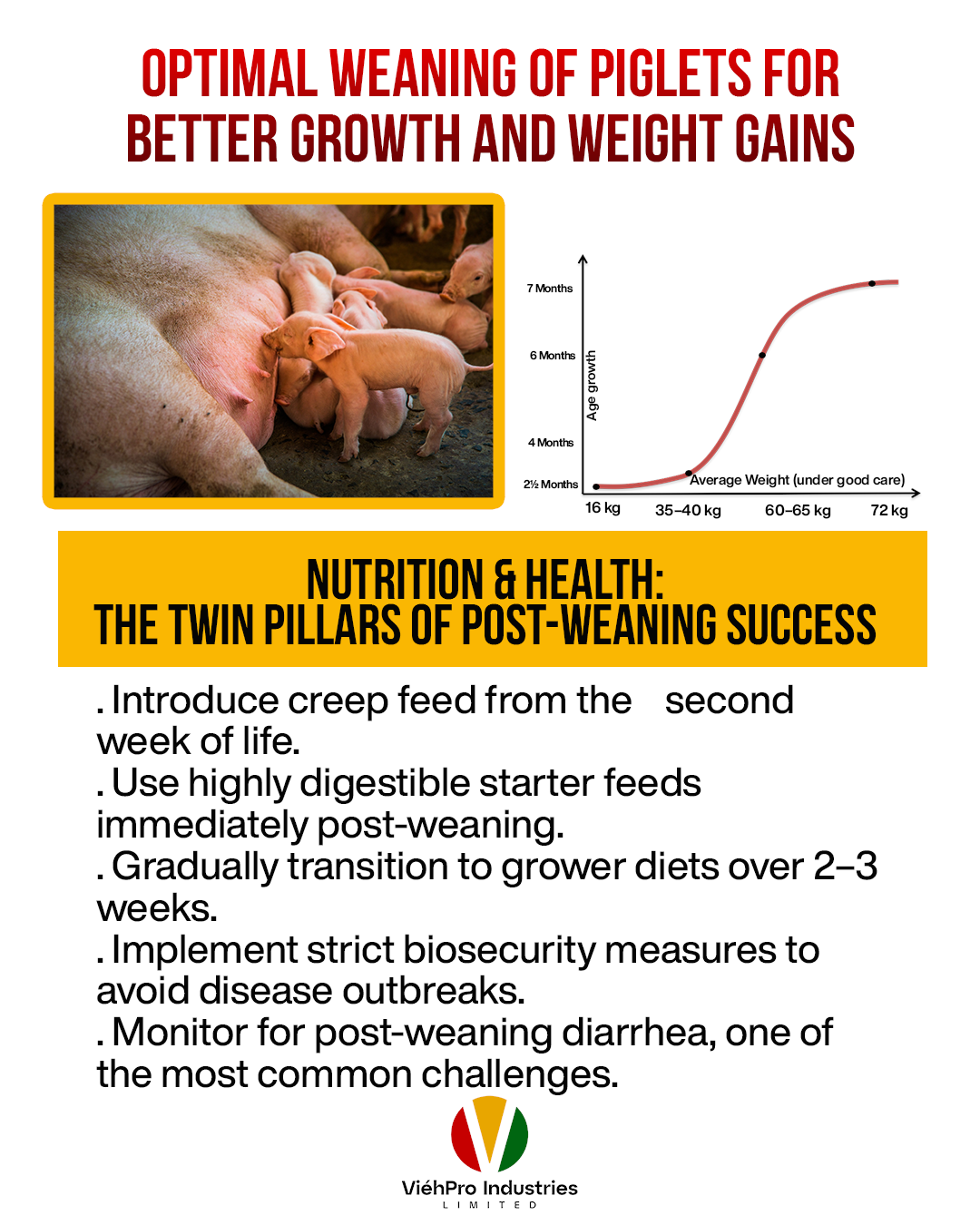
One of the biggest benefits of proper weaning age is its long-term impact on weight gain. Piglets weaned at 2½ months, if managed well nutritionally and medically, can attain a carcass weight of 72 kg by 7 months.
Here’s how that growth curve happens:
| Age | Average Weight (under good care) |
|---|---|
| 2½ months | 16 kg |
| 4 months | 35–40 kg |
| 6 months | 60–65 kg |
| 7 months | ~72 kg |
This growth rate is only possible when weaning is paired with:
- Proper creep feeding before weaning
- High-quality starter and grower rations
- Access to clean water
- Vaccinations and deworming schedules
- Low-stress housing conditions
4. Nutrition & Health: The Twin Pillars of Post-Weaning Success
To achieve target weights:
- Introduce creep feed from the second week of life.
- Use highly digestible starter feeds immediately post-weaning.
- Gradually transition to grower diets over 2–3 weeks.
- Implement strict biosecurity measures to avoid disease outbreaks.
- Monitor for post-weaning diarrhea, one of the most common challenges.
Additionally, zinc supplementation, probiotics, and maintaining warm, dry housing can help reduce stress and promote feed intake.
5. Economic Benefits of Proper Weaning
- Faster return on investment: Reaching slaughter weight earlier reduces feed and operational costs.
- Better feed efficiency: Well-weaned pigs convert feed more effectively.
- Lower veterinary costs: Healthier pigs mean fewer interventions.
- Improved market readiness: Consistent quality and weight enhance your bargaining power.
Final Thoughts
Weaning is not just about removing piglets from the sow—it’s about preparing them for the next phase of life. Weaning at 2½ months gives piglets the physical and immunological readiness to grow faster, healthier, and more profitably.
For Kenyan farmers aiming for efficient pork production, this simple management shift can transform herd performance and profitability.