

Introduction
Feed can account for up to 70% of total production costs in poultry farming. Many farmers reduce expenses and gain control over feed quality by formulating their own rations using locally available ingredients.
Advantages
- Cost Savings: Bulk purchasing of raw materials is often cheaper than buying commercial feeds.
- Quality Control: You control the nutrition profile; this reduces the risk of adulterated feeds.
- Flexibility: Rations can be tailored to specific stages—starter, grower, finisher, layer.
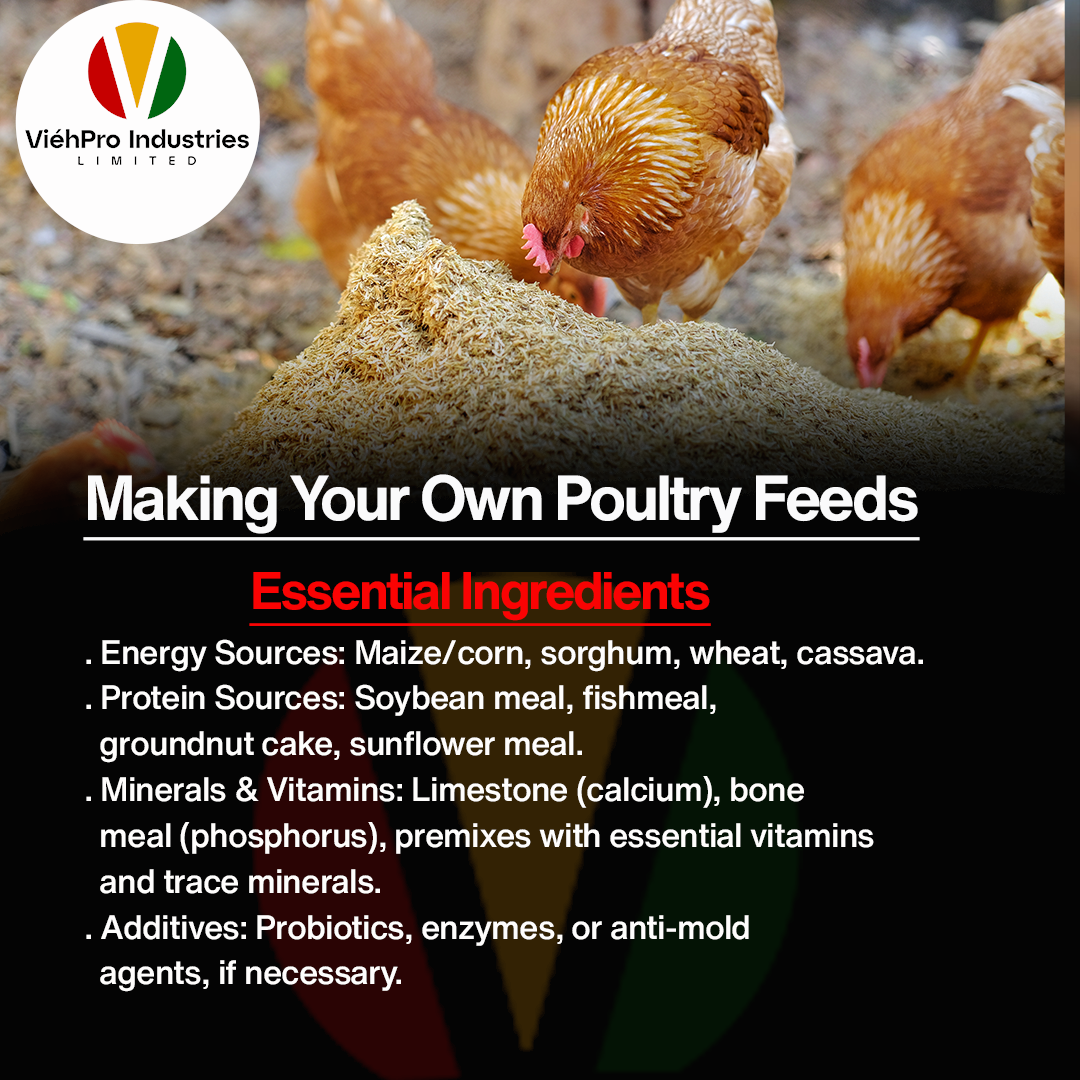
Essential Ingredients
- Energy Sources: Maize/corn, sorghum, wheat, cassava.
- Protein Sources: Soybean meal, fishmeal, groundnut cake, sunflower meal.
- Minerals & Vitamins: Limestone (calcium), bone meal (phosphorus), premixes with essential vitamins and trace minerals.
- Additives: Probiotics, enzymes, or anti-mold agents, if necessary.
Formulation Tips
- Consult a poultry nutritionist or use feed-formulation software for accurate nutrient proportions.
- Balance protein and energy levels: too much protein can be wasteful; too little reduces productivity.
- Monitor feed intake; adjust formulas based on bird performance and feed conversion ratios.
Quality Control
- Store feed ingredients in clean, dry areas to prevent mold or pests.
- Test feed batches for nutrient consistency if possible.
- Keep careful records of feed ingredient costs and usage.
Conclusion
Home-formulated feeds can significantly lower production expenses while maintaining or improving flock performance. Proper research, precise mixing, and ongoing quality checks are crucial for success.