
By Viéhpro Industry Limited
Calving is one of the most important—and sometimes most stressful—moments on a farm. While most cows deliver with no help, difficult calving (dystocia) can happen and must be handled carefully to protect both the cow and calf.
If not managed well, difficult calving can lead to injury, infection, or even loss of life. That’s why knowing when to step in, when to call for help, and what to do can make a big difference on your farm.
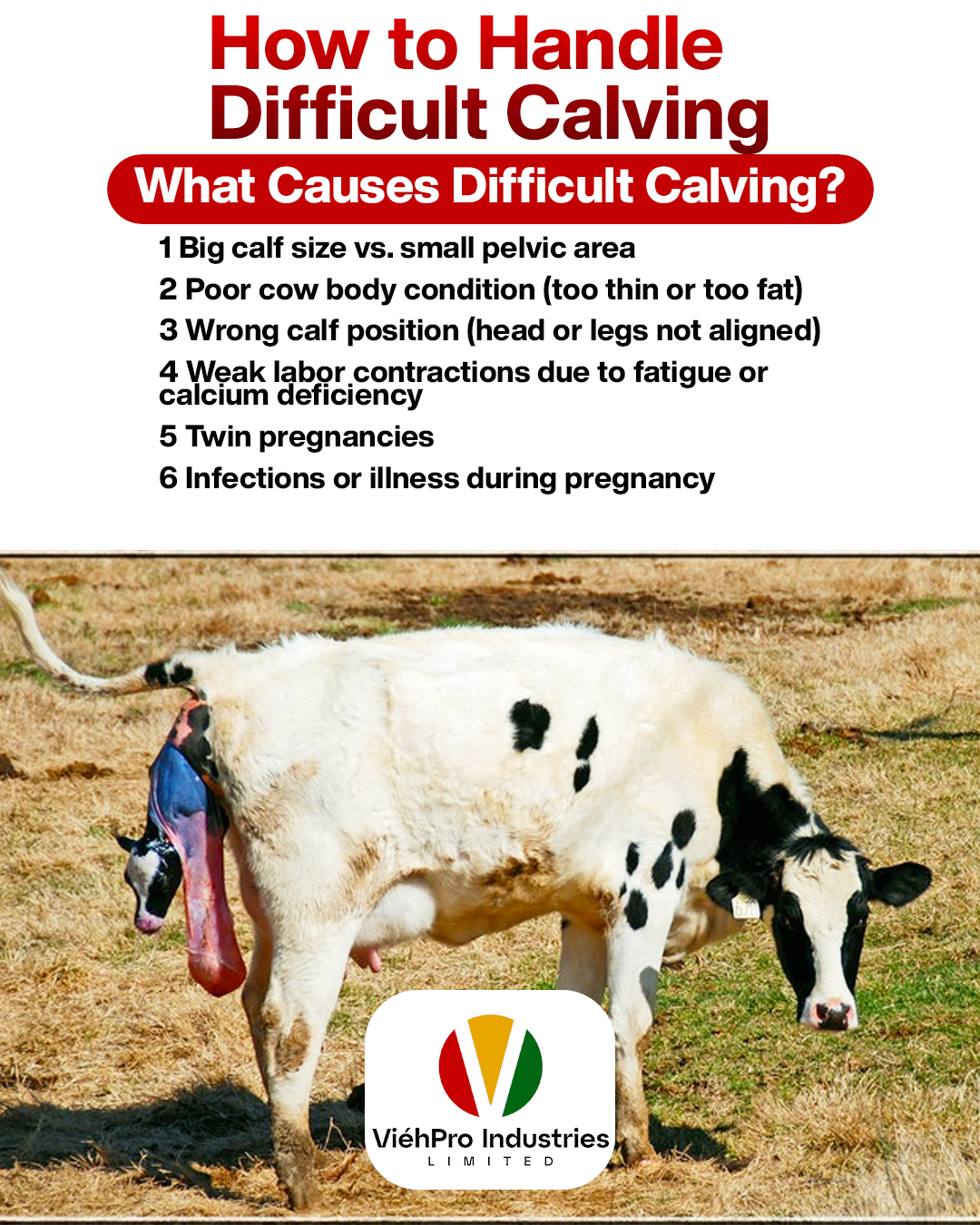
🐄 What Causes Difficult Calving?
- Big calf size vs. small pelvic area
- Poor cow body condition (too thin or too fat)
- Wrong calf position (head or legs not aligned)
- Weak labor contractions due to fatigue or calcium deficiency
- Twin pregnancies
- Infections or illness during pregnancy
⏱️ Signs That Calving is Difficult
- Cow is pushing hard for over 30–45 minutes with no progress
- Only one leg appears or parts of the calf are in the wrong order
- Labor starts and stops
- The cow is in pain, exhausted, or not making effort
- No water bag appears after early signs of labor
🛠️ What To Do During Difficult Calving
1. Stay Calm, Clean, and Prepared
- Wash your hands and arms thoroughly
- Use clean gloves and disinfect the vulva with mild antiseptic
- Have calving ropes, lubricant, and a clean calving area ready
2. Check Calf Position
- If safe, gently reach in to feel if the calf is in the right position:
- Both front legs and head facing out = good
- One leg missing, head turned back, or legs crossed = may need adjustment
3. Use Gentle Pulling (if trained)
- Only pull during contractions, and always straight back and slightly downward
- Don’t force it. If there’s no progress in 10 minutes—stop and call a vet
4. Call for Professional Help
- If unsure, don’t take chances
- A trained vet or technician can reposition the calf, perform a controlled delivery, or do a cesarean if needed
🧼 After the Calf is Born
- Clear mucus from nose and mouth
- Rub the calf to stimulate breathing
- Dip the navel with iodine to prevent infection
- Help the calf stand and suckle within 2 hours to receive colostrum
- Monitor the cow for retained placenta, bleeding, or weakness
🤝 Final Word from Viéhpro
At Viéhpro Industry Limited, we understand that the calving moment defines the future of your herd. That’s why we’re committed to sharing practical, field-tested knowledge with every article.
Before we launch our livestock care products, we’ll keep equipping farmers with insights to reduce losses and improve animal welfare.
A healthy delivery means a healthy herd—and a stronger farm.