
By Viéhpro Industries Ltd
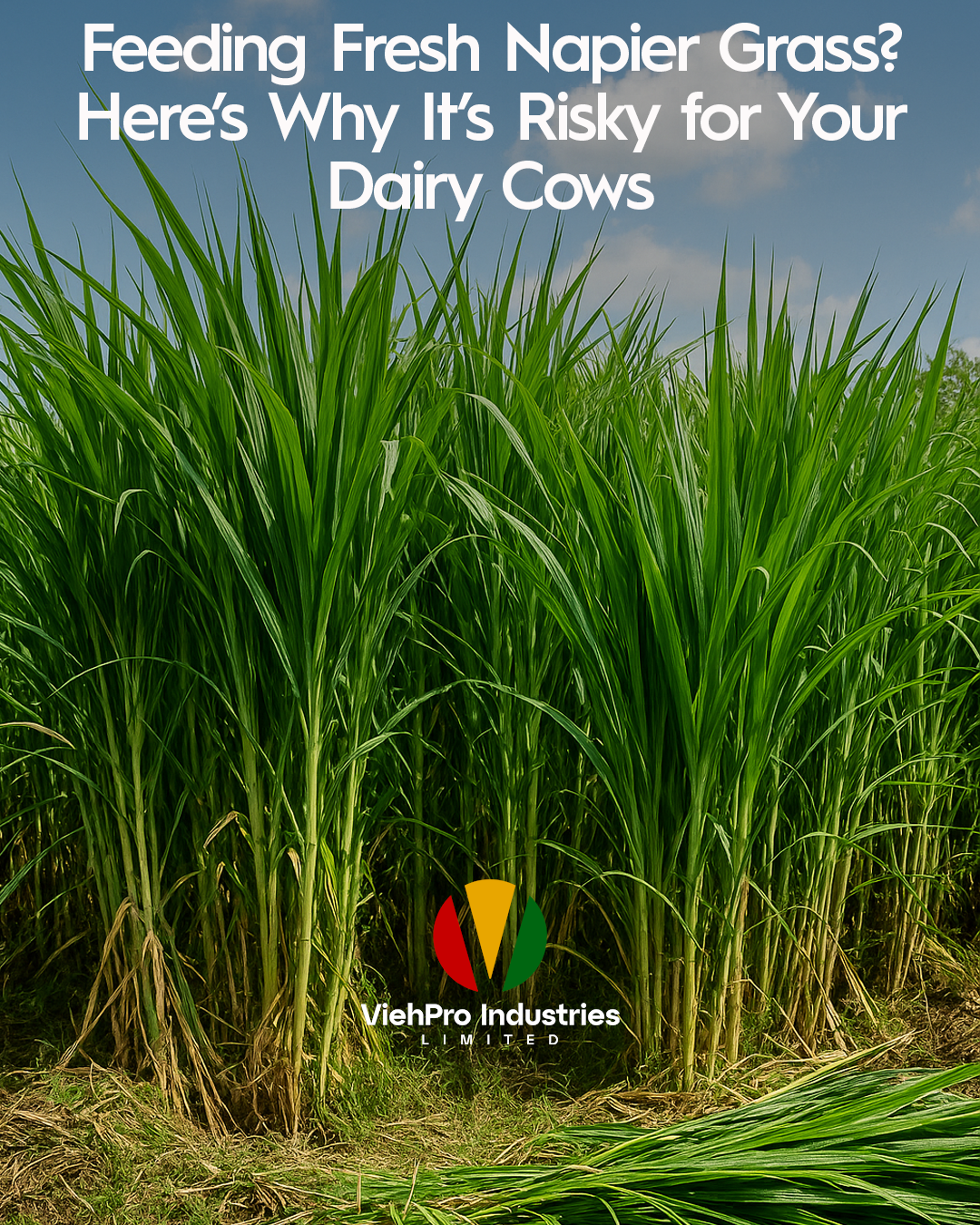
Many dairy farmers unknowingly make a costly feeding mistake: offering freshly cut Napier grass straight from the field to their cows. It looks fresh. It smells good. But it’s not ready for feeding.
💣 The Hidden Danger: Bloat
Fresh Napier is packed with moisture and fermentable sugars. Once inside the cow’s stomach, it ferments too quickly, creating excess gas in the rumen.
The result? Bloat — a serious, often fatal condition where the cow’s stomach swells, breathing becomes difficult, and death can occur within hours if not treated.
🦠 More Risks from Fresh Napier
Fresh-cut Napier may also carry:
- Nitrates (especially if fertilized recently)
- Surface bacteria and other harmful compounds
These can lead to:
- Diarrhea
- Reduced appetite
- Sudden drop in milk yield
- More vet costs
✅ The Simple Fix: Wilt Before Feeding
To make Napier safe and more digestible:
- Cut and leave it to wilt in shade for 6–12 hours
- This reduces moisture and sugars
- It breaks down dangerous compounds
- Result: Cleaner, safer, more digestible feed
🌿 Wilted Napier = More Milk
Cows that digest better:
- Absorb more nutrients
- Stay healthier
- Produce more milk
- Need fewer vet visits
Balanced rumen = Balanced profits.
👨🏾🌾 Viéhpro Advice:
Don’t just feed green—feed right.
Wilting Napier may take a few extra hours, but the benefits are long-lasting: higher milk, fewer losses, and By Viéhpro Industries Ltd
Many dairy farmers unknowingly make a costly feeding mistake: offering freshly cut Napier grass straight from the field to their cows. It looks fresh. It smells good. But it’s not ready for feeding.
💣 The Hidden Danger: Bloat
Fresh Napier is packed with moisture and fermentable sugars. Once inside the cow’s stomach, it ferments too quickly, creating excess gas in the rumen.
The result? Bloat — a serious, often fatal condition where the cow’s stomach swells, breathing becomes difficult, and death can occur within hours if not treated.
🦠 More Risks from Fresh Napier
Fresh-cut Napier may also carry:
- Nitrates (especially if fertilized recently)
- Surface bacteria and other harmful compounds
These can lead to:
- Diarrhea
- Reduced appetite
- Sudden drop in milk yield
- More vet costs
✅ The Simple Fix: Wilt Before Feeding
To make Napier safe and more digestible:
- Cut and leave it to wilt in shade for 6–12 hours
- This reduces moisture and sugars
- It breaks down dangerous compounds
- Result: Cleaner, safer, more digestible feed
🌿 Wilted Napier = More Milk
Cows that digest better:
- Absorb more nutrients
- Stay healthier
- Produce more milk
- Need fewer vet visits
Balanced rumen = Balanced profits.
👨🏾🌾 Viéhpro Advice:
Don’t just feed green—feed right.
Wilting Napier may take a few extra hours, but the benefits are long-lasting: higher milk, fewer losses, and healthier cows.
Smart feeding is smart farming.cows.
Smart feeding is smart farming.