
What is Artificial Insemination (AI)?
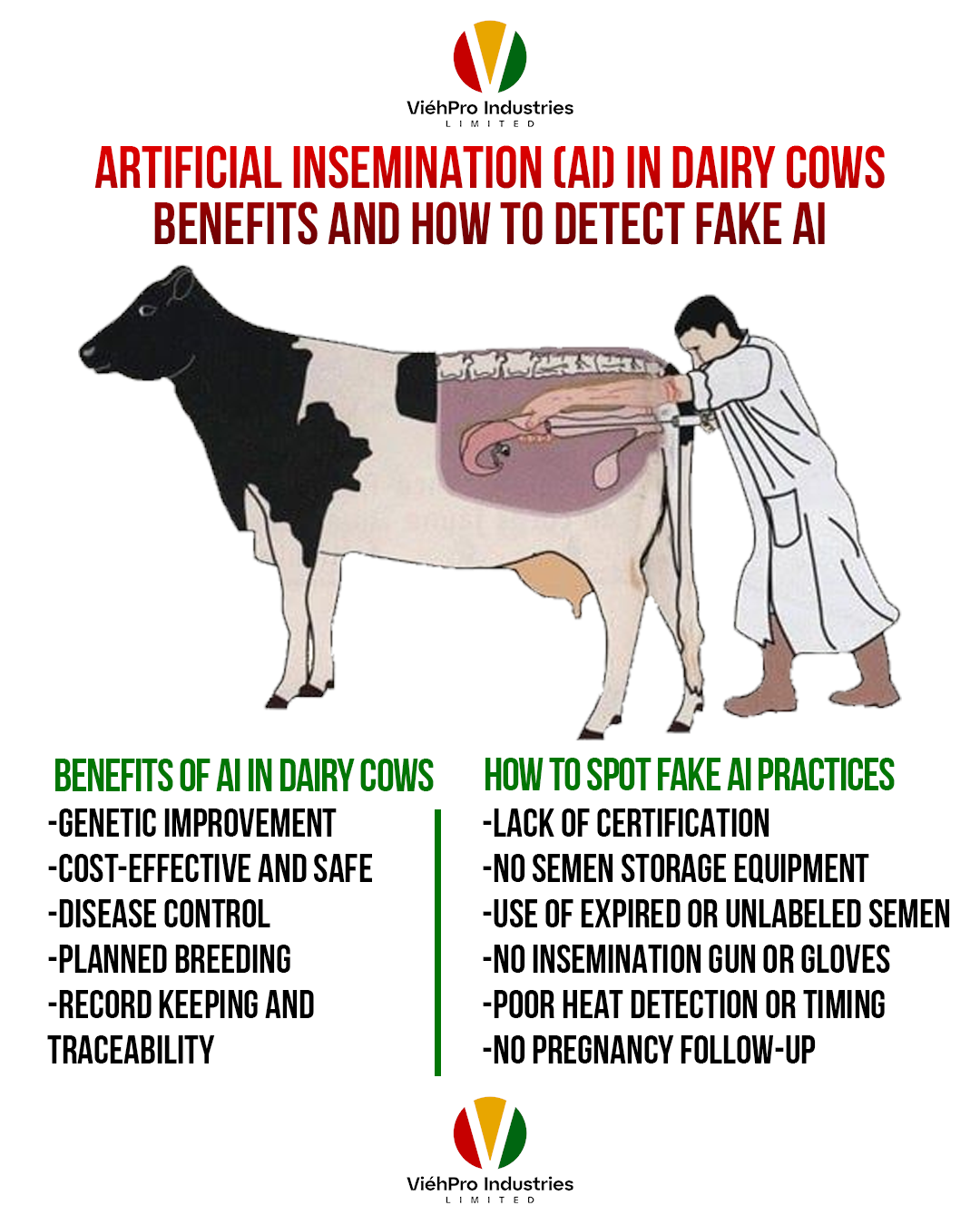
Artificial Insemination (AI) is the process of depositing semen from a selected bull into the reproductive tract of a cow using specialized equipment, rather than through natural mating. The image you’ve shared illustrates this technique, where a trained technician inserts the semen into the cow’s uterus using a long insemination rod, after guiding it through the rectum to correctly position the cervix.
Benefits of AI in Dairy Cows
1. Genetic Improvement
AI allows dairy farmers to access superior bull genetics from around the world without the cost of purchasing or maintaining live bulls. This leads to:
- Better milk production
- Improved fertility
- Disease resistance
- Desirable physical traits (e.g. udder conformation)
2. Cost-effective and Safe
- Reduces the risks and costs associated with keeping bulls (feed, space, accidents).
- Safer for both the farmer and the cows as bull aggression is avoided.
3. Disease Control
- Limits the transmission of sexually transmitted infections (e.g. Bovine Venereal Campylobacteriosis).
- Certified semen is collected in sterile conditions, minimizing disease introduction to the herd.
4. Planned Breeding
- Allows synchronization of estrus and planned calving seasons.
- Better control of calving intervals and herd replacement planning.
5. Record Keeping and Traceability
- Each straw of semen has a unique code, allowing accurate tracking of genetic lineage.
- Helps build pedigree and performance records for herd improvement.
How to Spot Fake AI Practices
With the increased demand for AI, some unqualified individuals may take advantage of unsuspecting farmers. Here’s how to detect fake or substandard AI services:
1. Lack of Certification
- A real AI technician must be trained and certified by a recognized body (e.g. government livestock department or veterinary college).
- Ask for proof of certification and recent training.
2. No Semen Storage Equipment
- Genuine semen is stored in liquid nitrogen tanks at -196°C.
- If the technician shows up without this equipment, it’s a red flag.
3. Use of Expired or Unlabeled Semen
- Always verify the straw number, bull ID, breed, and expiry date.
- Fake AI providers might use expired or unknown-source semen, affecting fertility.
4. No Insemination Gun or Gloves
- A proper AI procedure requires:
- Insemination gun
- Sheaths
- Long disposable gloves
- Lubricant
- If they insert bare hands without sterile tools, they may cause infections or misplace semen.
5. Poor Heat Detection or Timing
- AI should be performed 12-18 hours after the onset of heat.
- Fakers might inseminate cows not in heat or guess the timing, leading to poor conception rates.
6. No Pregnancy Follow-Up
- A genuine technician will schedule pregnancy checks around 30-45 days after AI.
- Fake practitioners disappear after payment and don’t monitor outcomes.
How to Protect Your Herd
✅ Work with certified veterinary officers or trained inseminators.
✅ Keep detailed records of AI dates, semen batch, technician name, and results.
✅ Observe hygiene standards. Insist on gloves, clean equipment, and proper technique.
✅ Educate your team on estrus signs and timing AI correctly.
✅ Report suspicious activity to local livestock authorities.
Conclusion
Artificial Insemination is a powerful tool that can transform your dairy herd’s productivity and genetics when done correctly. However, fake AI practices can lead to infertility, financial loss, and wasted time. By staying informed and working with trusted professionals, you can maximize the benefits of AI and secure the future of your farm.