
Here’s Why—and What To Do
Brought to you by Viéhpro Industries Ltd
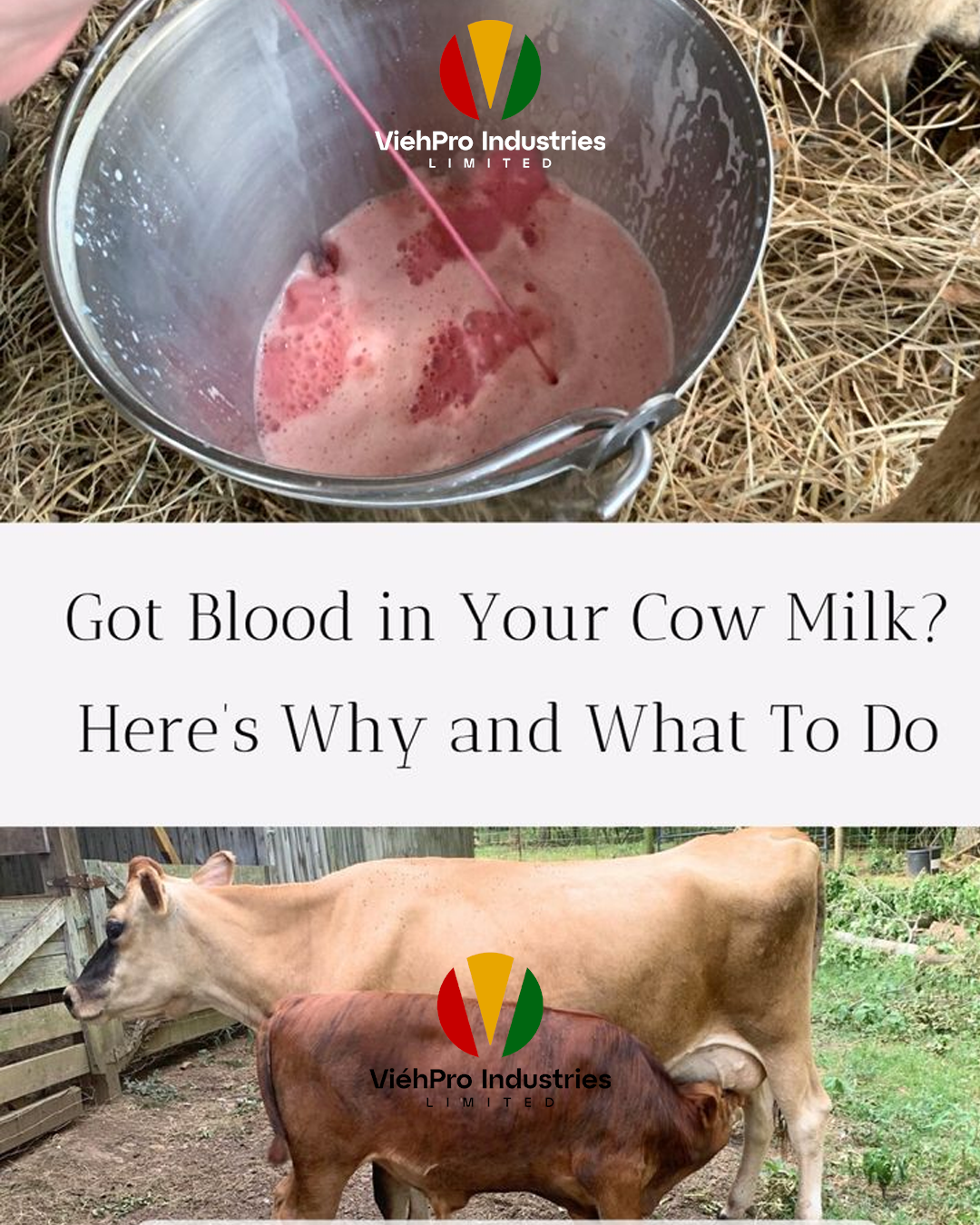
Seeing blood in milk can be alarming. But before panic sets in, let’s break it down: What causes it, and what action should you take?
🐄 What Causes Blood in Milk?
- Ruptured Blood Vessels in the Udder
This often happens after trauma or excessive pressure during milking, especially in fresh cows or those with high milk flow. - Mastitis (Udder Infection)
Inflammation of the udder tissue can cause capillary damage, allowing blood to leak into milk. - Injury or Bruising
A kick, bump, or rough handling can injure delicate tissues in the udder. - Calving-Related Trauma
In heifers or cows that recently calved, hormonal changes and udder stress can lead to vascular rupture. - Nutritional Deficiencies
Lack of Vitamin C or other essential nutrients weakens blood vessels, increasing bleeding risk.
🩺 What You Should Do:
- Stop Milking the Affected Quarter (if localized)
Give the udder time to heal. Milk out gently only if it’s swollen. - Check for Mastitis Symptoms
Clots, heat, swelling, or pain? That’s a red flag. Test using a CMT (California Mastitis Test) or call a vet. - Improve Milking Technique
Be gentle, avoid over-milking, and always sanitize hands and equipment. - Boost Nutrition
Feed rich in Vitamin C, E, selenium, and balanced minerals strengthens blood vessels. - Consult a Vet Immediately
If bleeding persists or is accompanied by signs of mastitis or cow discomfort, a vet will recommend the right medication or treatment. Don’t self-medicate—professional advice is key.
💡 At Viéhpro Industries Ltd…
We empower farmers with knowledge that protects their herds and boosts productivity. Blood in milk may be temporary—but your response makes the difference.
Healthy cows = clean milk = better profits.
Stay informed. Stay ahead.