
By Viéhpro Industries Ltd
When it comes to livestock, early detection saves lives. Goats, like many animals, often hide signs of illness until the condition becomes serious. As a farmer, knowing how to tell a healthy goat from a sick one can make all the difference.
Here’s a practical guide to help you quickly identify when your goats need attention.
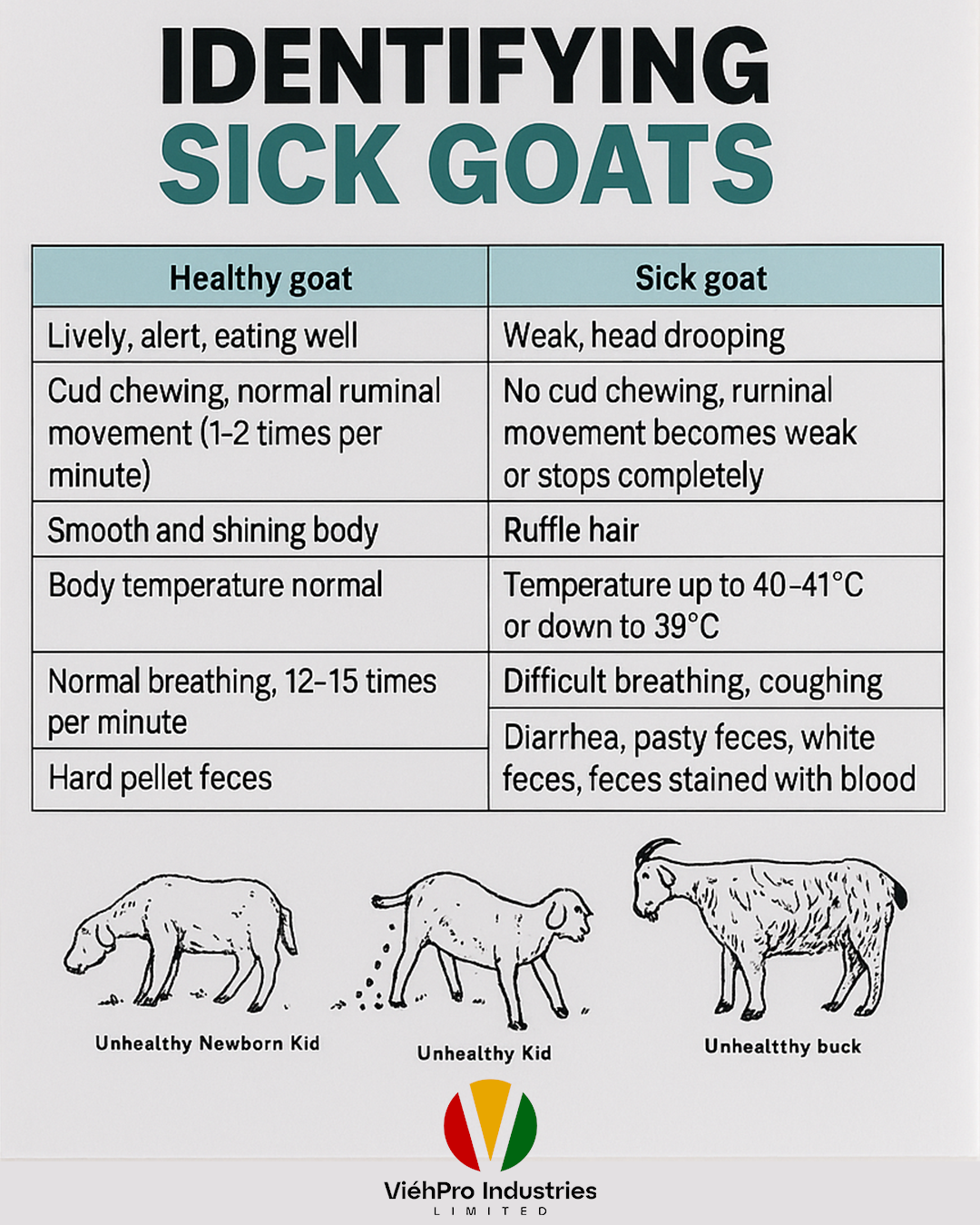
✅ Healthy Goat Signs
A healthy goat should show the following characteristics:
- Lively, alert, and eating well
- Chewing cud with normal ruminal movement (1–2 times per minute)
- Smooth and shiny coat
- Normal body temperature (about 39–39.5°C)
- Breathes easily, around 12–15 times per minute
- Hard pellet-like feces
❌ Sick Goat Signs
Watch out for the following red flags:
- Weakness, drooping head, or loss of appetite
- No cud chewing, or rumen movement becomes weak or stops
- Rough, dull coat (ruffled hair)
- High fever (up to 40–41°C) or low temp (below 38°C)
- Labored or difficult breathing, coughing
- Unusual feces: diarrhea, white feces, pasty stools, or feces stained with blood
🐐 Common Visual Signs
- Unhealthy newborn kid: weak, cold, often silent or unable to nurse
- Unhealthy growing kid: diarrhea, thin body, arched back, sunken eyes
- Unhealthy adult buck/doe: poor coat, weak posture, possible nasal discharge
🩺 What to Do If You Suspect Illness
- Isolate the sick goat to prevent spreading disease
- Check temperature and rumen movement
- Provide clean water and supportive care
- Contact a vet immediately for diagnosis and treatment
- Review nutrition and deworming schedules
📣 Viéhpro Advice:
Your goat will never say, “I feel sick.”
You must learn to observe, listen, and act fast.
Healthy goats = productive farm = healthy profit.