
What Is the Dry Period?
The dry period is the phase when a dairy cow stops producing milk, typically lasting about 6 to 8 weeks (45–60 days) before calving. It’s like a maternity leave for cows — a time for the udder tissue to regenerate and the cow’s body to prepare for the next lactation cycle.
But beyond udder health, this rest period is vital for metabolic balance — especially in preventing milk fever, a condition that can cripple both cow health and farm productivity.
What Is Milk Fever?
Milk fever, or hypocalcemia, is a metabolic disorder that occurs when a cow’s calcium levels drop drastically around calving. It’s most common in high-yielding older cows. The cow’s body fails to mobilize enough calcium from its bones and feed fast enough to meet the sudden demand for milk production right after giving birth.
🔴 Symptoms include muscle tremors, loss of appetite, cold ears, inability to stand, and in severe cases, death.
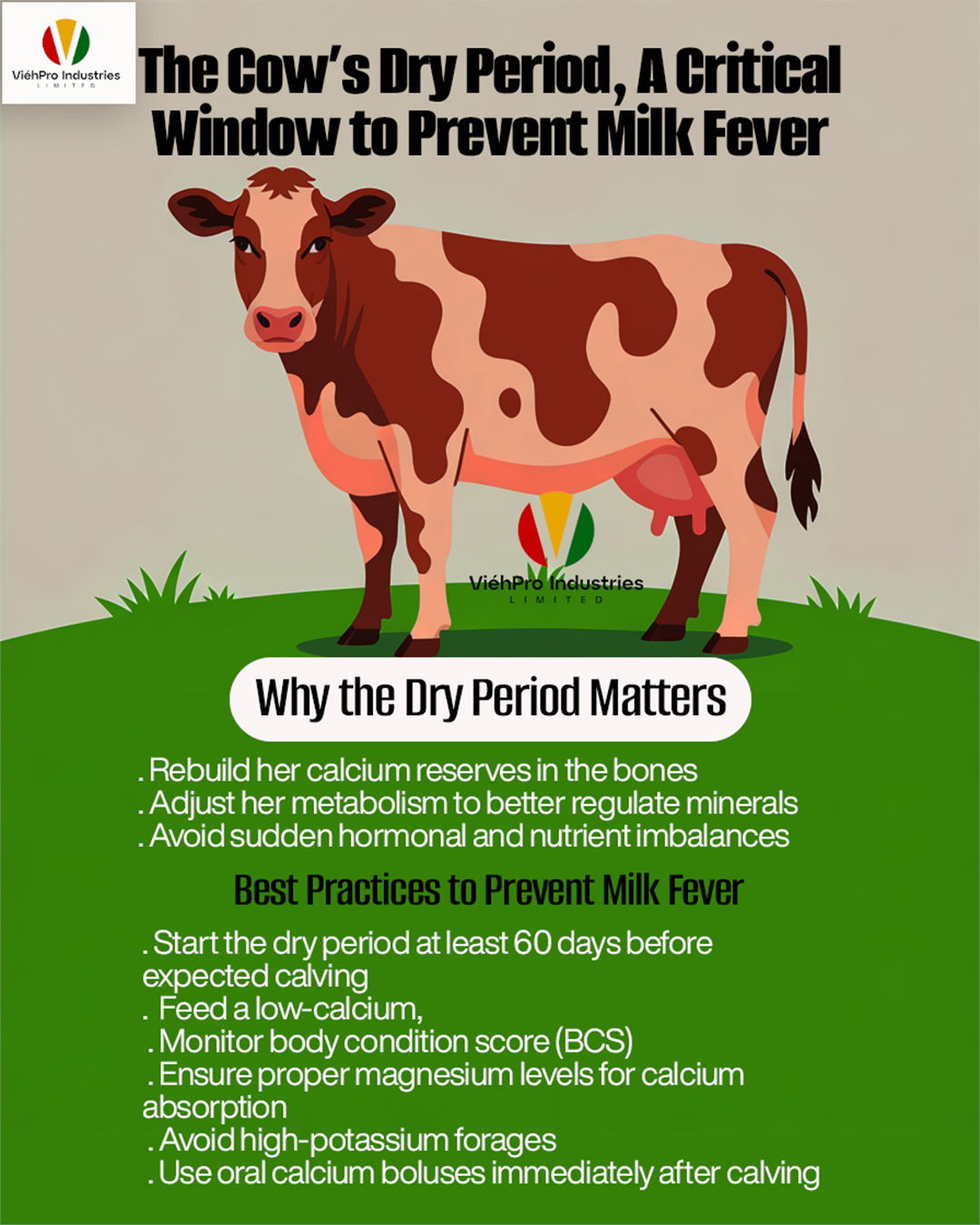
Why the Dry Period Matters
The dry period plays a preventative role in milk fever by allowing the cow to:
- ✅ Rebuild her calcium reserves in the bones
- ✅ Adjust her metabolism to better regulate minerals
- ✅ Avoid sudden hormonal and nutrient imbalances
Here’s How:
1. Bone Mobilization Training
During the dry period, feeding cows a low-calcium diet helps “train” the body to start pulling calcium from the bones. This makes the body more responsive when the demand for calcium spikes during calving.
Think of it like a metabolic rehearsal — the cow learns to regulate calcium before it’s urgently needed.
2. DCAD Diets (Dietary Cation-Anion Difference)
A well-balanced dry cow diet with a negative DCAD (more anions like chloride and sulfur vs. cations like sodium and potassium) acidifies the blood slightly, stimulating the cow’s parathyroid gland to mobilize calcium more effectively.
Farmers who implement DCAD diets during the dry period have significantly fewer milk fever cases.
3. Avoiding Overfeeding Energy
Overfeeding during the dry period leads to fatty liver and insulin resistance, increasing the risk of metabolic diseases, including milk fever. Controlled-energy diets during the dry period help prevent this cascade of issues.
4. Strategic Mineral Supplementation
Targeted supplements during the dry period — such as Vitamin D3, magnesium, and anionic salts — boost the cow’s ability to absorb and regulate calcium.
Best Practices to Prevent Milk Fever:
✔️ Start the dry period at least 60 days before expected calving
✔️ Feed a low-calcium, negative DCAD diet
✔️ Monitor body condition score (BCS)—ideal is 3.0–3.5
✔️ Ensure proper magnesium levels for calcium absorption
✔️ Avoid high-potassium forages like fresh grass in the close-up ration
✔️ Use oral calcium boluses immediately after calving if necessary
Final Thought
The dry period is not just a break; it’s a strategic reset for the dairy cow’s body.
Farmers who optimize this phase create healthier cows, better lactation outcomes, and more stable herd performance. Preventing milk fever starts long before calving; it begins with intentional care during the dry period.