
When selecting or evaluating lambs for breeding, showing, or market purposes, there are key physical traits that define a high-quality animal. These traits contribute to the lamb’s health, structure, muscle development, and overall productivity. Below is a guide to identifying a good quality lamb:
Key Physical Features of a Good Lamb
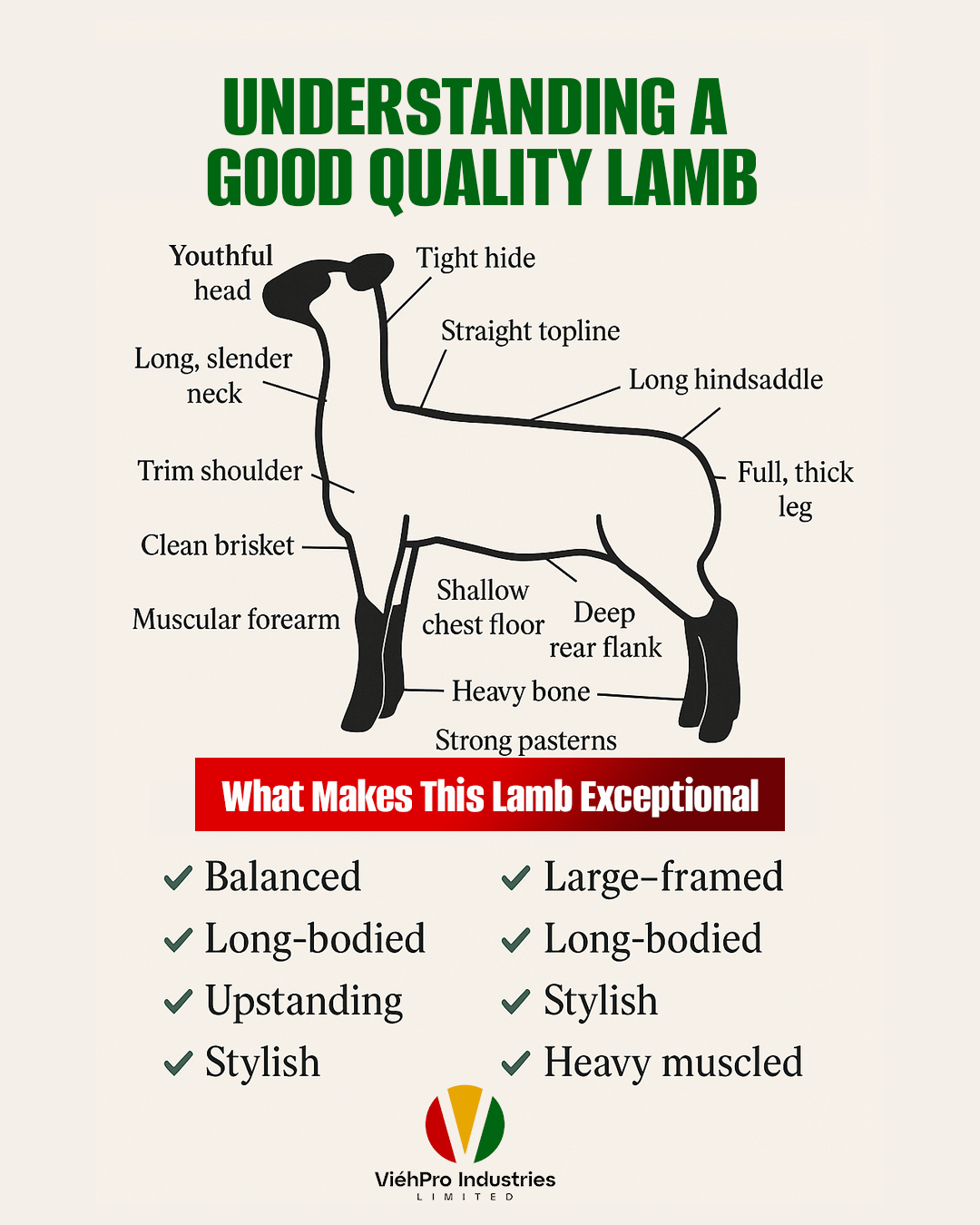
- Youthful Head
A refined, clean head gives the lamb a youthful and attractive appearance. - Long, Slender Neck
This contributes to an elegant profile and overall balance of the lamb. - Tight Hide
A firm, snug hide shows proper conditioning and enhances muscle visibility. - Straight Topline
A straight back from shoulders to hips reflects a strong skeletal structure. - Trim Shoulder & Clean Brisket
A smooth shoulder with a clean, non-bulging brisket is desirable for balance and movement. - Muscular Forearm
Indicates early muscling and strength in the front legs. - Shallow Chest Floor
Ensures a sleek underline and a more desirable, athletic build. - Heavy Bone
Strong bone structure supports the animal’s weight and adds to durability. - Strong Pasterns
Good pastern strength contributes to sound footing and longevity. - Deep Rear Flank
A full and deep flank provides volume and suggests good internal capacity. - Long Hindsaddle
A long loin and hindquarter region means more muscle and meat yield. - Level Dock
A level tail head contributes to overall balance. - Full, Thick Leg
Indicates strong muscle development in the hindquarters.
What Makes This Lamb Exceptional
- ✅ Balanced
- ✅ Large-framed
- ✅ Long-bodied
- ✅ Upstanding
- ✅ Stylish
- ✅ Heavy muscled
These traits make the lamb ideal for show, breeding, and commercial purposes. Always observe these physical indicators when selecting or evaluating lambs for performance and aesthetics.