
Introduction
Layers are chickens raised primarily for egg production. Efficient layer management can offer a steady stream of income for smallholders and large-scale farmers alike. Understanding key production stages and requirements ensures consistent, high-quality egg yield.
Breeds
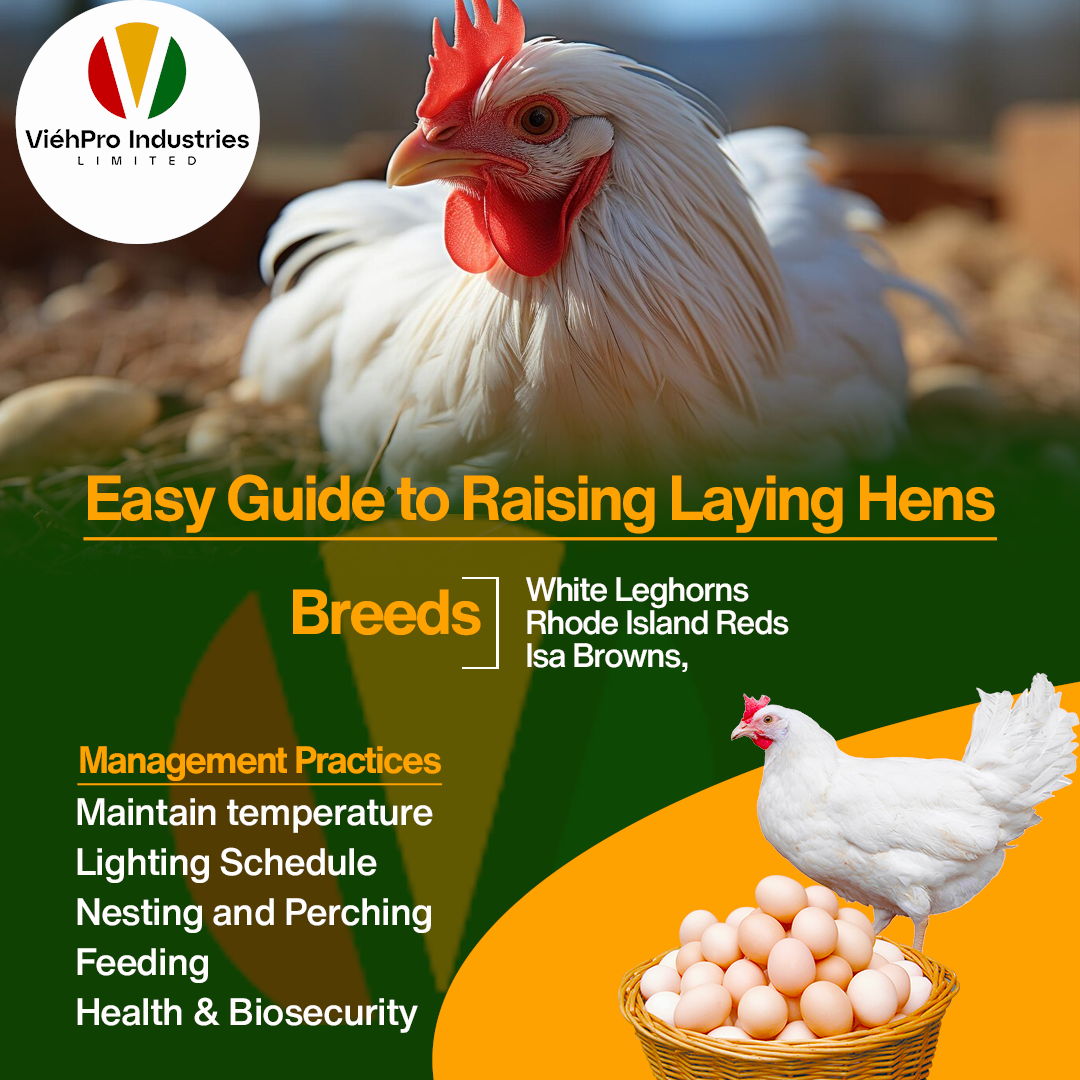
- White Leghorns: High egg producers, known for large white eggs.
- Rhode Island Reds: Hardy breed; brown eggs.
- Isa Browns, Hy-Line Browns: Popular commercial hybrids; high productivity with brown eggs.
Management Practices
- Brooding: Layers need a well-lit, warm area during their first few weeks. Maintain temperature (32–35°C in the first week) and gradually decrease.
- Lighting Schedule: A consistent 14–16 hours of light per day encourages optimal laying rates.
- Nesting and Perching: Provide comfortable nesting boxes (one box per 4–5 hens). This reduces stress and improves egg cleanliness.
- Feeding: Use layer-specific rations with higher calcium content (around 3–4% calcium) for strong eggshells.
- Health & Biosecurity: Regular vaccination (e.g., against Newcastle disease, Infectious Bronchitis) and deworming are crucial for flock health.
Egg Collection and Storage
- Collect eggs at least twice a day to minimize breakage and maintain cleanliness.
- Store eggs in a cool, dry place, ideally around 13°C–16°C, and rotate stock (older eggs sold or processed first).
Conclusion
Successful layer production hinges on consistent management—proper feeding, lighting, disease prevention, and comfortable housing. Attention to these details translates into higher egg yield and profitability.